
When it comes to automotive safety features, most people immediately think of airbags and ABS (Anti-lock Braking System). However, few pay attention to the brake pads—the unsung heroes that silently “bite” onto the brake discs, ensuring smooth stops with every brake application. Unlike the roaring engine that steals the spotlight or the high-tech infotainment screen, brake pads are the most critical “executors” in a vehicle’s braking system. Without reliable brake pads, even the most advanced safety technologies may become mere empty promises.
Have you ever experienced this? When braking on a slippery road during rainy weather, you always feel the pedal becoming soft and the braking distance increasing; after driving at high speeds, you can detect a faint smell of burnt rubber; and occasionally, you might even hear a screeching “squeal” from the brakes. These signals are actually early warnings of brake pad noise causes and solutions, as well as the brake pads “calling for help.”.
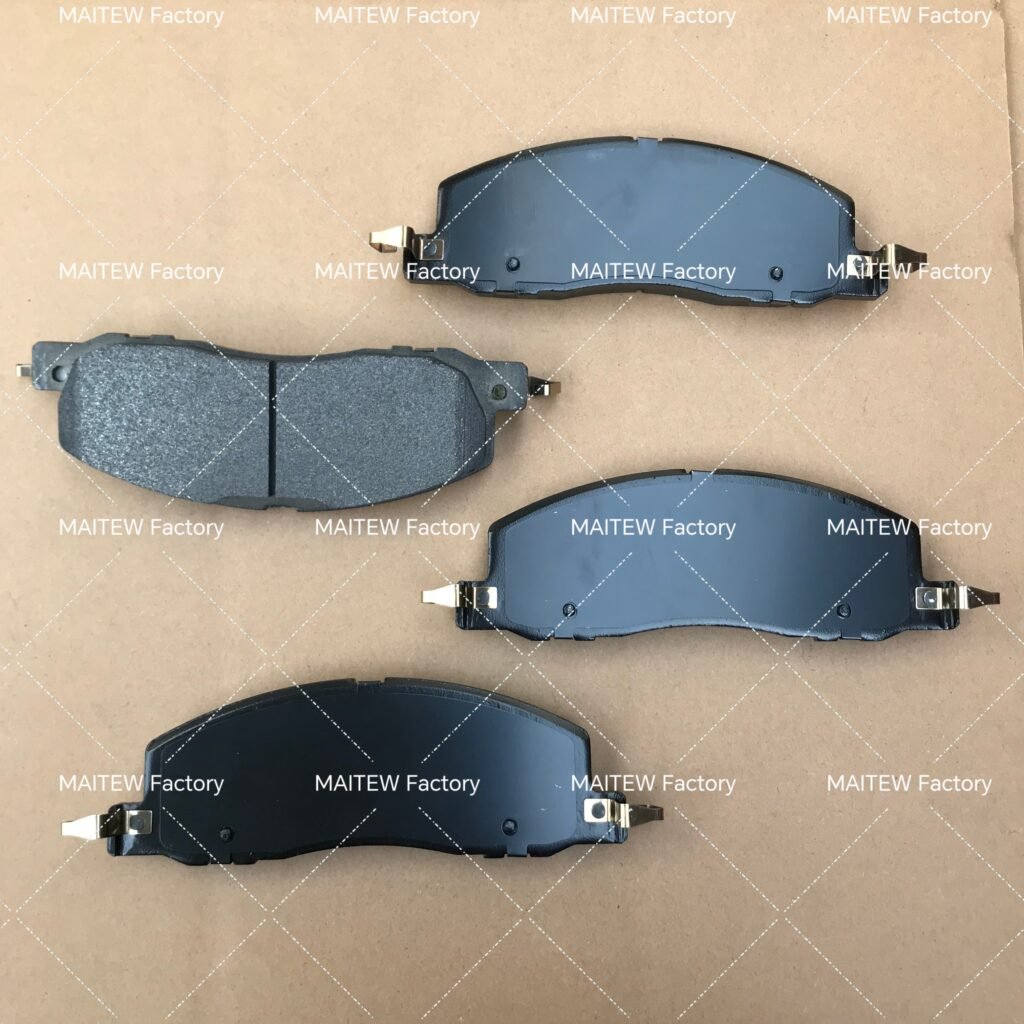
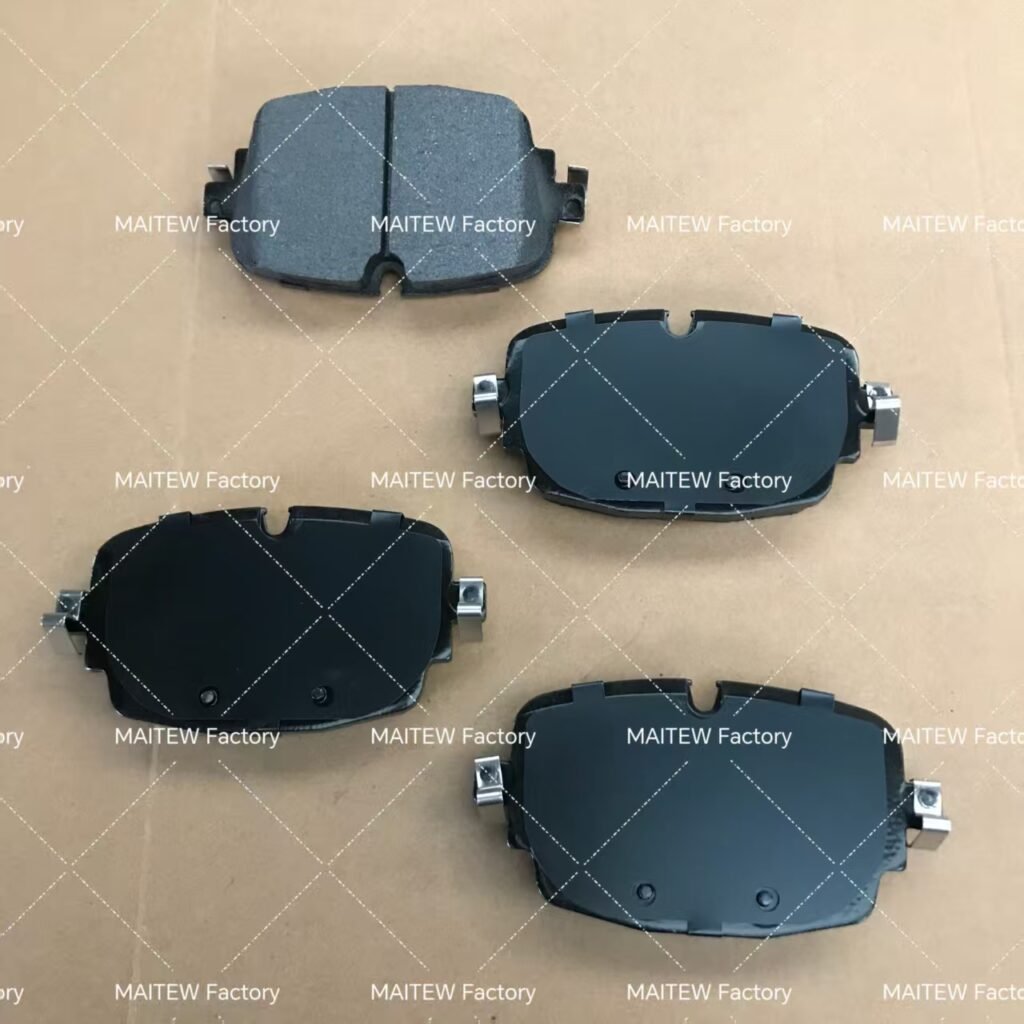
Many car owners’ understanding of brake pads is still at the level of “replacing them when they are worn thin”, but they ignore their material, adaptability, and maintenance details, which directly affect driving safety. There are various types of brake pads on the market, with significant differences in brake pad materials. Ceramic materials have high temperature resistance and low dust, making them suitable for urban commuting and high-speed driving; The semi metallic material has strong braking performance and high wear resistance, making it more suitable for SUV heavy-duty brake pad recommended models; And few metal materials balance braking effect and quietness, making them a popular answer for choosing brake pads for family cars. The selection of brake pads varies greatly depending on different car models and driving habits – using SUV brake pads on a small sedan not only slows down the braking response, but may also damage the brake discs; On the contrary, the brake pads of household cars cannot withstand the load of SUV, which will accelerate wear and shorten their lifespan.
Another easily overlooked point is the “break in” of brake pads. The precautions for the running in of new brake pads clearly state that the newly replaced brake pads should not be immediately slammed on. It is necessary to drive gently for 200-300 kilometers to ensure that the brake pads are fully in contact with the brake discs in order to achieve the best braking effect. Many car owners rush to the highway or brake abruptly after replacing their brake pads, which can cause uneven wear of the brake pads and directly affect braking performance, posing a safety hazard.
In addition to choosing the right and using them well, daily maintenance of brake pads is also crucial. Regularly cleaning the mud and sand in the gaps of the brake pads can prevent impurities from scratching the brake disc; Check the thickness of the brake pads. Regarding the thickness of the brake pads that needs to be replaced, the industry consensus is that when the friction material is less than 3 millimeters, it must be replaced in a timely manner; If there is abnormal noise or shaking during braking, don’t blame it on the quality of the brake pads. It may be due to deformation of the brake disc, poor return of the calipers, and other issues, which need to be repaired in a timely manner.
Although brake pads are small, they are the “last line of defense” for car safety. It is not visible or tangible like car lights or tires, but silently guards the safety of passengers’ lives every time they brake. Next time you drive, you may want to pay more attention to the brake pedal under your feet – it is not only a device that controls the speed of the car, but also a reliable set of brake pads that provide a safety barrier for you.


No responses yet