
As a manufacturer of car brake pads, we have more than twenty years of production experience. Today let’s talk about ceramic brake pads.
Ceramic brake pads: Comfortable and long-lasting option, tailored to the needs of the urban elite.
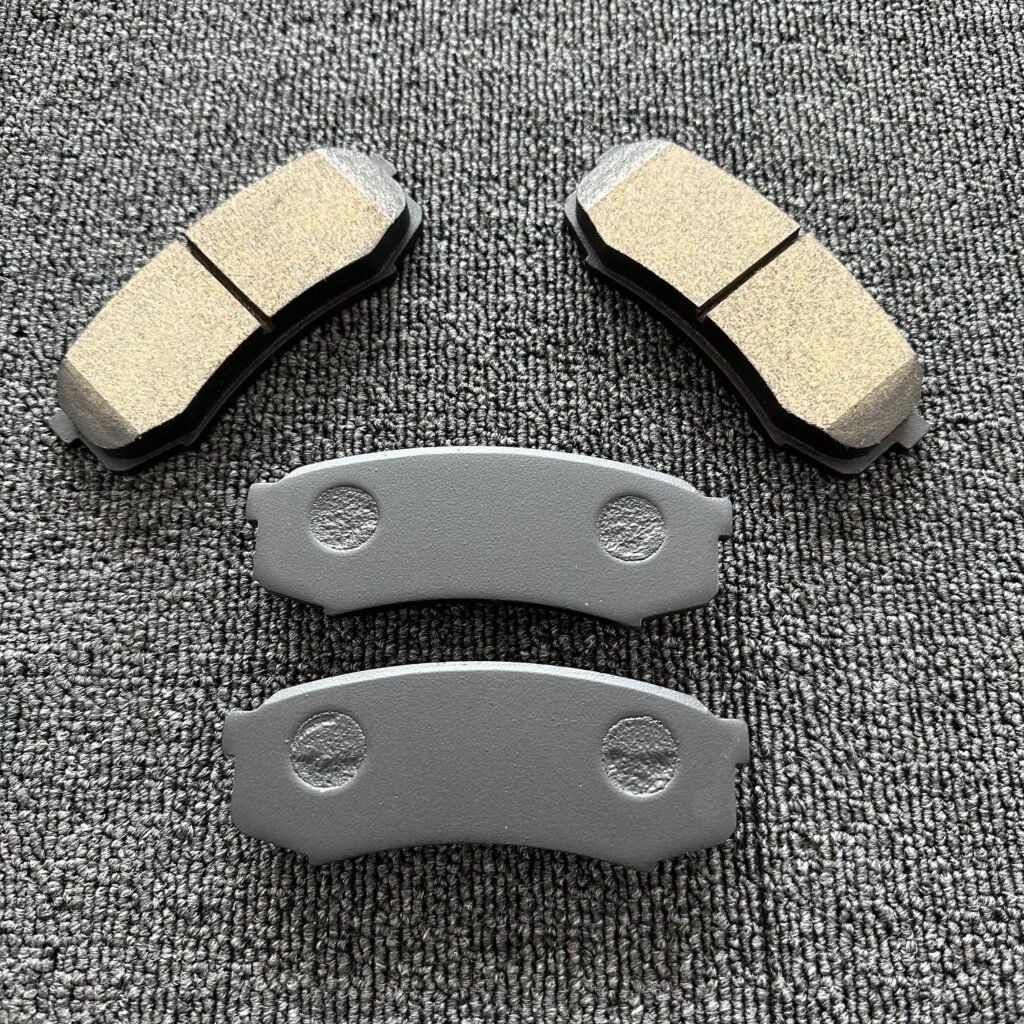
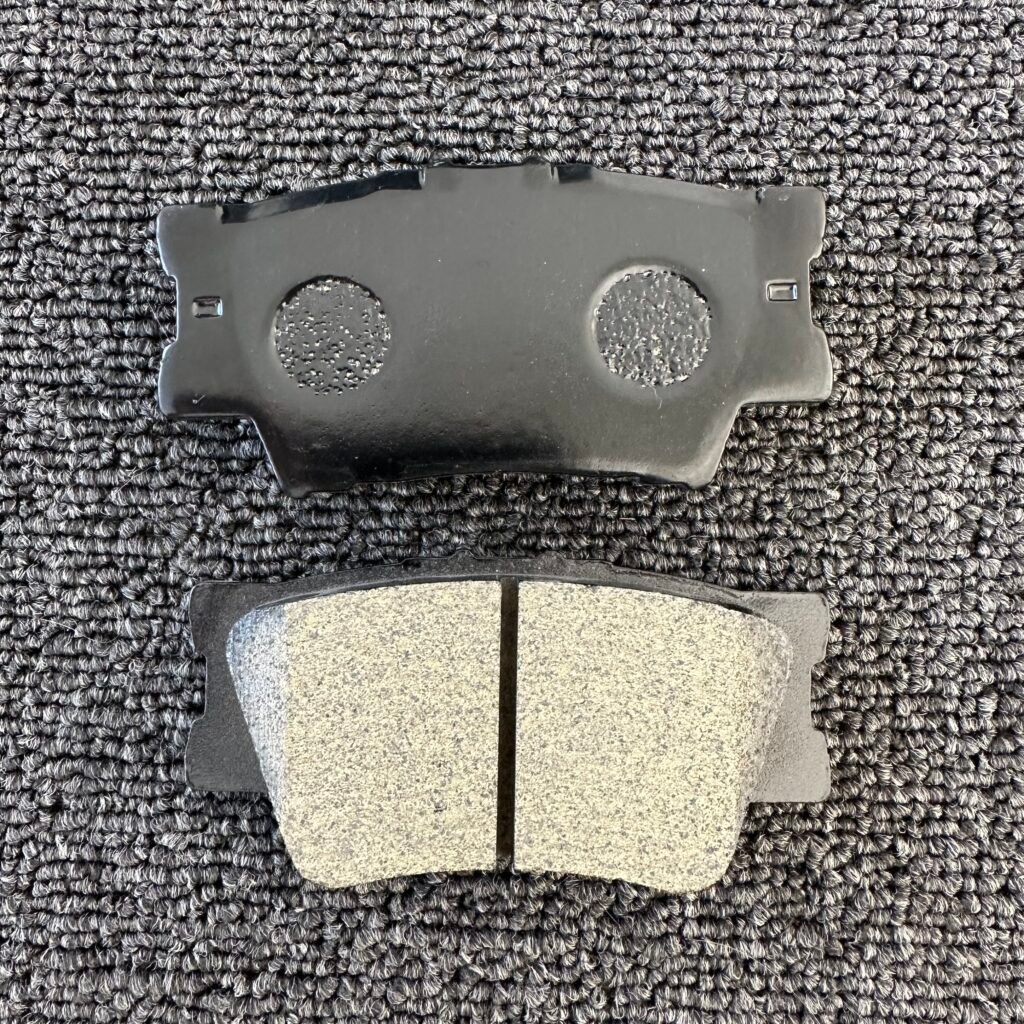
Ceramic brake pads are the “high-end models” that have been highly praised in recent years. Its core components mainly include non-metallic such as ceramic fibers, alumina, and silica, supplemented by a small amount of metal powder (such as copper powder and iron powder) to enhance friction performance. The coefficient is stable between 0.35 and 0.45. The focus of the research and development of this type of brake pad is “comfort and longevity”, solves the pain points of the semi-metallic material, such as more dust and loud noise, while also taking into account the high-temperature resistance.
Core advantages: low dust and low noise are its most prominent features. The amount of dust generated during friction with ceramic material is only 1/ 5 of that of semi-metallic material, and it is mostly fine white dust, which is not easy to adhere to the hub and can keep the hub clean for a long time, especially suitable for users who pay attention to the cleanliness of the vehicle appearance. The probability of noise during braking is extremely low, and the quietness performance is excellent, which meets comfort needs of family cars. The high temperature resistance is excellent, and it can maintain a stable friction coefficient in high temperature environments below 400℃, and it is not to appear thermal decay during continuous mountain braking and high-speed long-time driving, with a service life of up to 4-60000 kilometers, which is “most worry-free” choice among the four types of materials. In addition, the hardness of the ceramic material is moderate, which has less wear on the brake disc and takes account the long-term performance and disc protection.
Performance shortcomings: The price is relatively high, 30%-50% more expensive than semi-metallic materials, resulting in a higher initial purchase. In extreme and intense driving scenarios (such as track racing), its braking force output has slightly less “instantaneous power” compared to semi-metallic materials and carbonceramic composites, making it more suitable for users who prefer steady driving. Some low-priced ceramic brake pads have a “false ceramic” issue, where the performance is significantly by reducing the content of ceramic fibers to cut costs. Careful selection is necessary.
Adaptation scenario: family cars, high-end luxury models; users who mainly commute in cities and value driving comfort and quietness; vehicles that frequently on highways and mountain roads and require frequent braking; owners who have high requirements for wheel cleaning and do not want to maintain frequently; users with sufficient budget and pursue long-term peace mind.
If you are purchasing brake pads, whether metal or ceramic, we are more than happy to provide you with professional advice. You can inform us of your specific needs, and we will help you match the most suitable solution. If you have purchasing and bargaining needs, please feel free to contact us, and we will provide you with high- products and thoughtful and considerate service.


No responses yet