
Break out of the four major cognitive misconceptions:
Misconception 1: Blindly pursuing “ceramic materials” and neglecting scene adaptation
Many car owners believe that “ceramic materials are the best brake pads”, but in reality, if your vehicle is only used for short distance urban commuting, the high price and long-term advantages of ceramic materials cannot be fully utilized, and instead increase the cost of use; If you frequently drive aggressively, the explosive braking force of ceramic materials may be insufficient, which may affect braking safety. The correct logic is to first clarify one’s core needs – whether to pursue “quiet cleaning” or “performance cost-effectiveness”, and then match the materials.
Misconception 2: Only focus on price, ignore friction coefficient and certification
The friction coefficient is the core indicator of brake pad performance, and the national standard requires ≥ 0.35. High quality products usually have a friction coefficient between 0.4-0.5. Some low-priced brake pads, in order to reduce costs, falsely label the friction coefficient and even use prohibited asbestos materials. At high temperatures, the friction coefficient drops sharply, and the braking distance is extended by more than 10 meters, seriously endangering safety. When making a purchase, it is important to pay attention to the friction coefficient label on the product packaging, national 3C certification, and environmental compliance certification (such as low copper certification), rather than simply comparing prices.
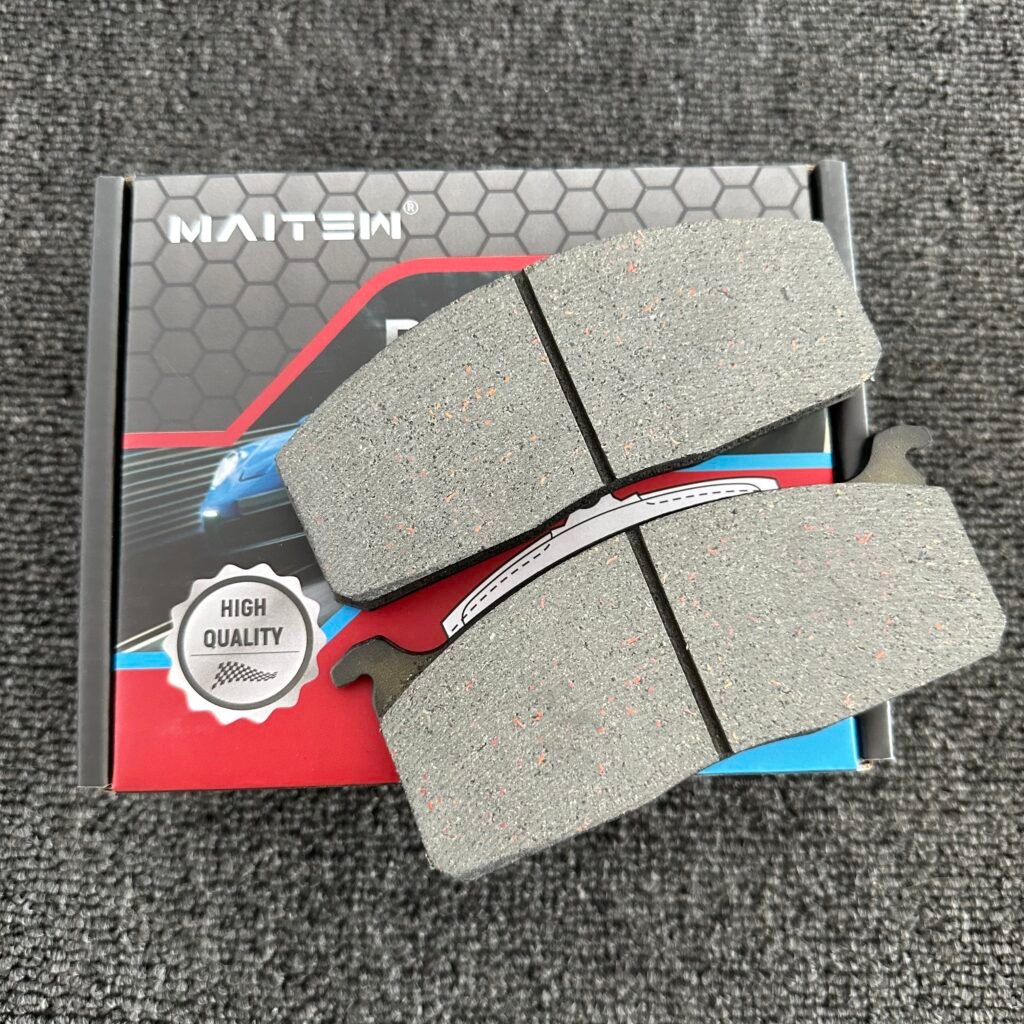
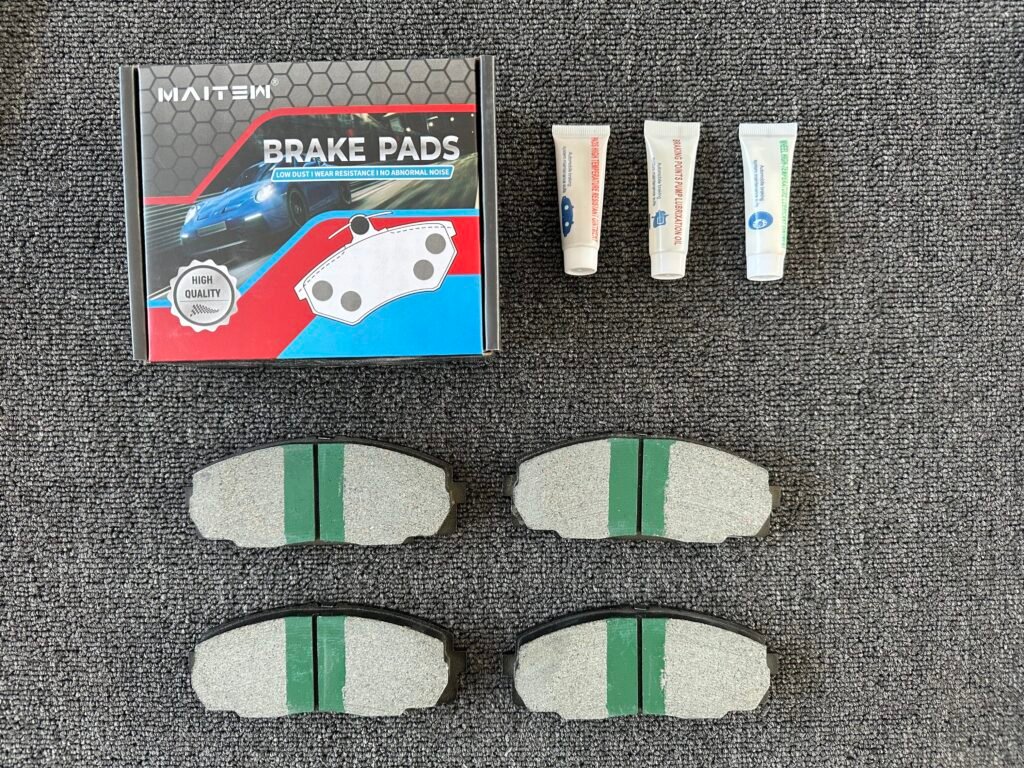
Misconception 3: Superstition in “universal models” and neglect the adaptability of vehicle models
The brake pad size, caliper pressure, and brake system tuning vary greatly among different car models. For example, the brake pads of BMW 3 Series and Honda Accord must not be mixed. The “universal” brake pads may have issues with mismatched dimensions and uneven transmission of braking force. Long term use can lead to brake noise, uneven wear, and even damage to the braking system. When purchasing, be sure to provide the chassis number or vehicle model information, and choose the original factory compatible or well-known brand’s specialized car products.
Misconception 4: Confusing “silence” and “performance”, sacrificing safety for comfort
Some businesses use “silence” as a gimmick to reduce abnormal noise by lowering the friction coefficient, but in fact sacrifice braking performance. High quality brake pads should balance quietness and performance. By optimizing the fiber arrangement and friction modifier ratio, they can achieve low noise while maintaining a stable friction coefficient. When making a purchase, you can check the noise test data of the product to avoid falling into the trap of “silence=poor quality”.
Conclusion: There is no superiority or inferiority in materials, adaptation is the king
The material selection of brake pads is never a multiple-choice question of “either black or white”, but an application question of “precise matching”. The gentleness of organic materials, the balance of semi metallic materials, the comfort of ceramic materials, and the ultimate of carbon ceramic composite materials correspond to different driving scenarios and needs.


No responses yet